After the Fire, After the Divorce: Why Los Angeles Real Estate Remains the Ultimate Act of Reinvention
Khushboo Siddhiwala
Apr 25, 2026 · 4 min read
Story
There is something profoundly Angeleno about buying a house when everything else is falling apart. Not as an act of desperation, but as a declaration — a quiet, enormously expensive insistence that the story is not over, that in fact the most interesting chapter is only just beginning. The real estate pages of Los Angeles have always functioned as a kind of parallel biography, running alongside the tabloid headlines and the award season coverage, telling us something truer and more durable about how people in this city actually choose to live.
Consider the current moment. Jennifer Lopez closes a painful, very public chapter with Ben Affleck and responds not with retreat but with an $18 million home purchase in Los Angeles. The move lands two months after her divorce is finalized, and the cultural read is immediate: this is not a woman in hiding. This is a woman making an architectural statement about her own continuity. The house is not a consolation prize. It is a manifesto.
Meanwhile, Cara Delevingne — who lost her previous Los Angeles home to the devastating fires that reshaped so much of the city's landscape and so many of its residents' lives earlier this year — has picked up an $11.5 million property and begun again. There is something almost mythological about that particular act of rebuilding, the way it mirrors Los Angeles itself, a city that has burned and flooded and shaken and still somehow remains the most aspirational address on earth.
Shohei Ohtani, who has quietly become the most compelling athlete in American sports, has made his own move: a $7.85 million mansion that signals something beyond mere investment. When the best baseball player in the world chooses to plant himself in Los Angeles rather than retreat to some gated enclave far from the city's complexity, it reads as an endorsement of the place itself. And Michael B. Jordan, riding the extraordinary cultural wave of his film Sinners, has relisted his home at $10.49 million — timing the market with the same precision he brings to every other aspect of his career.
Broker Jason Oppenheim has been speaking with unusual candor lately about the forces reshaping luxury real estate from the inside: the mansion tax, the persistent pressure of elevated interest rates, the questions about crime and homelessness that serious buyers are asking more directly than they did five years ago. These are not comfortable conversations, but they are necessary ones, and the fact that the market's most prominent figures are having them publicly suggests a maturity and a confidence in Los Angeles's fundamental proposition that doomsday headlines consistently underestimate.
Because here is what the numbers, taken together, are actually saying: the creative class is not leaving. The athletes are not leaving. The people who build culture and absorb culture and live loudly inside of it are still choosing Los Angeles, still spending at the level that requires genuine conviction. Miami continues to attract its share of CEOs and capital — that story is real — but what it has not yet manufactured is the particular alchemy of celebrity, creativity, and climate that makes an $18 million house in Los Angeles feel, to its buyer, like the only logical next move.
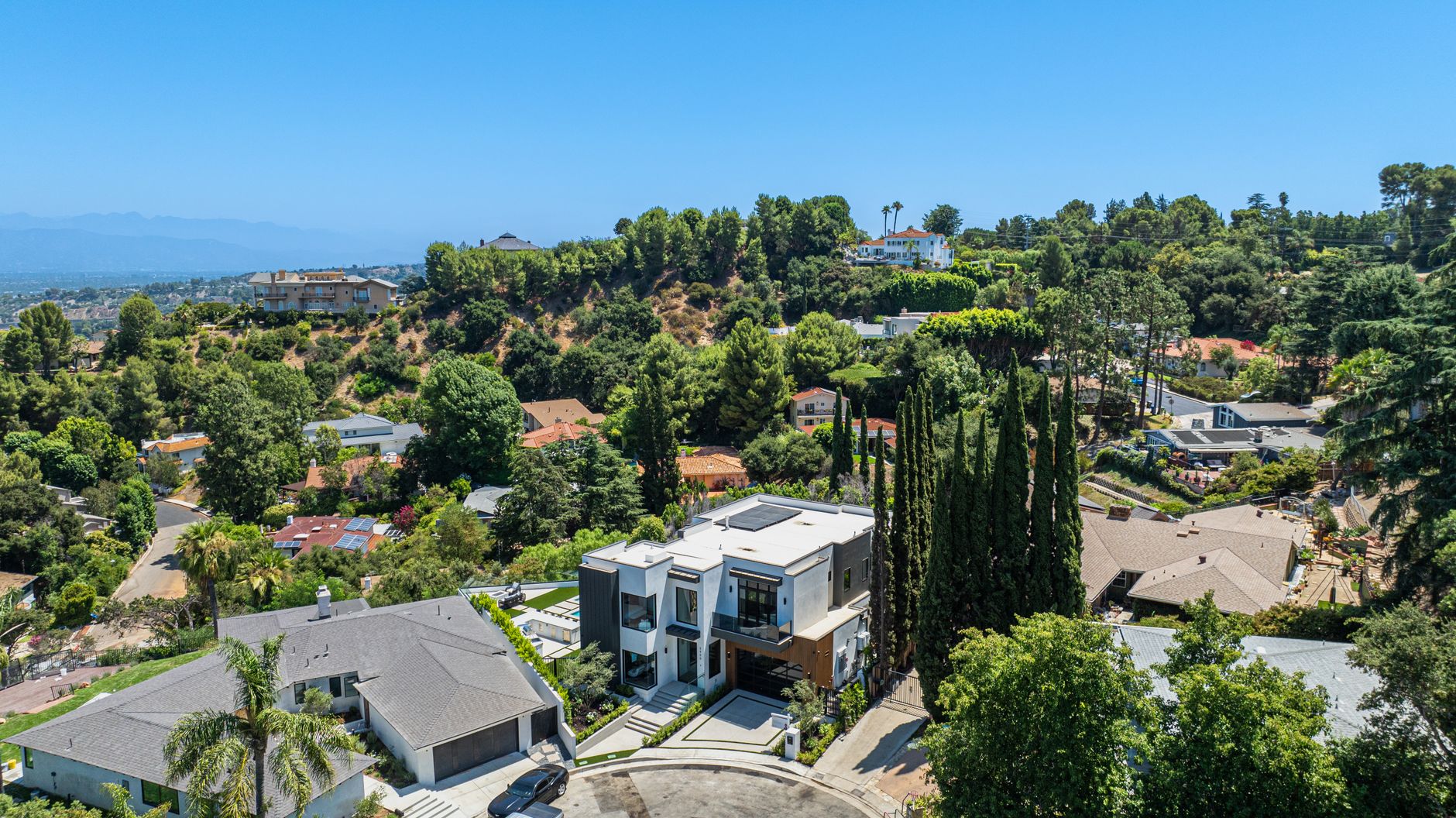
The post-fire market was supposed to accelerate the exodus. It has not. What it has done is sharpen the desire for homes that feel resilient, considered, and deeply connected to the land they sit on — properties with architectural integrity, with outdoor space that acknowledges both the beauty and the unpredictability of Southern California. The renovation boom visible from the air over neighborhoods like Silver Lake, Brentwood, and the canyons confirms that people are not simply buying and selling. They are investing in permanence, or at least in their own version of it.
Los Angeles has always asked its residents to hold two truths simultaneously: that everything here is impermanent, and that nowhere else will do. The celebrities buying and rebuilding and relisting right now are not immune to that tension. They are, if anything, its most visible expression. Every transaction is a small act of faith, a bet placed on a city that keeps demanding you believe in it — and keeps, against considerable odds, rewarding those who do.
Ecomstation.ai