California Housing Market 2026: Inland Cap Rates Outpace Coastal Glitz
Khushboo Siddhiwala
Jul 29, 2026 · 6 min read
Story
At 415 South Grand Avenue in Los Angeles, where the penthouse recently traded for a discounted $8.4 million, institutional investors are quietly rewriting their playbooks. While mainstream media outlets cite the latest California Association of Realtors report labeling the California housing market 2026 as the coldest in a decade, smart capital is moving to where the yields actually live. The high-level data suggests a freeze, with statewide transaction volumes down 4.2 percent year-over-year. Yet this macro narrative masks a highly fragmented, highly profitable reality for those who know where to look. To understand what is happening, one must look past the aggregate percentages and focus on specific neighborhoods where the cash-on-cash return is outpacing historical averages. The transition of wealth from coastal tech hubs to secondary inland valleys is no longer a slow migration; it is a rapid capital realignment. Wealthy buyers who find themselves priced out of prime coastal enclaves are looking toward more stable suburban nodes. Consequently, the California housing market 2026 is not dying; it is simply migrating to sub-markets that offer both defensive yield and long-term appreciation. Indeed, the influx of massive capital into the artificial intelligence sector, where startups pulled in $220 billion in early 2026, is fueling a localized wealth effect. Highly compensated engineers are exiting San Francisco and hunting for real estate assets that offer actual utility and insulation from volatile public markets, changing the dynamics of the traditional buying season.
The Inland Yield Playbook
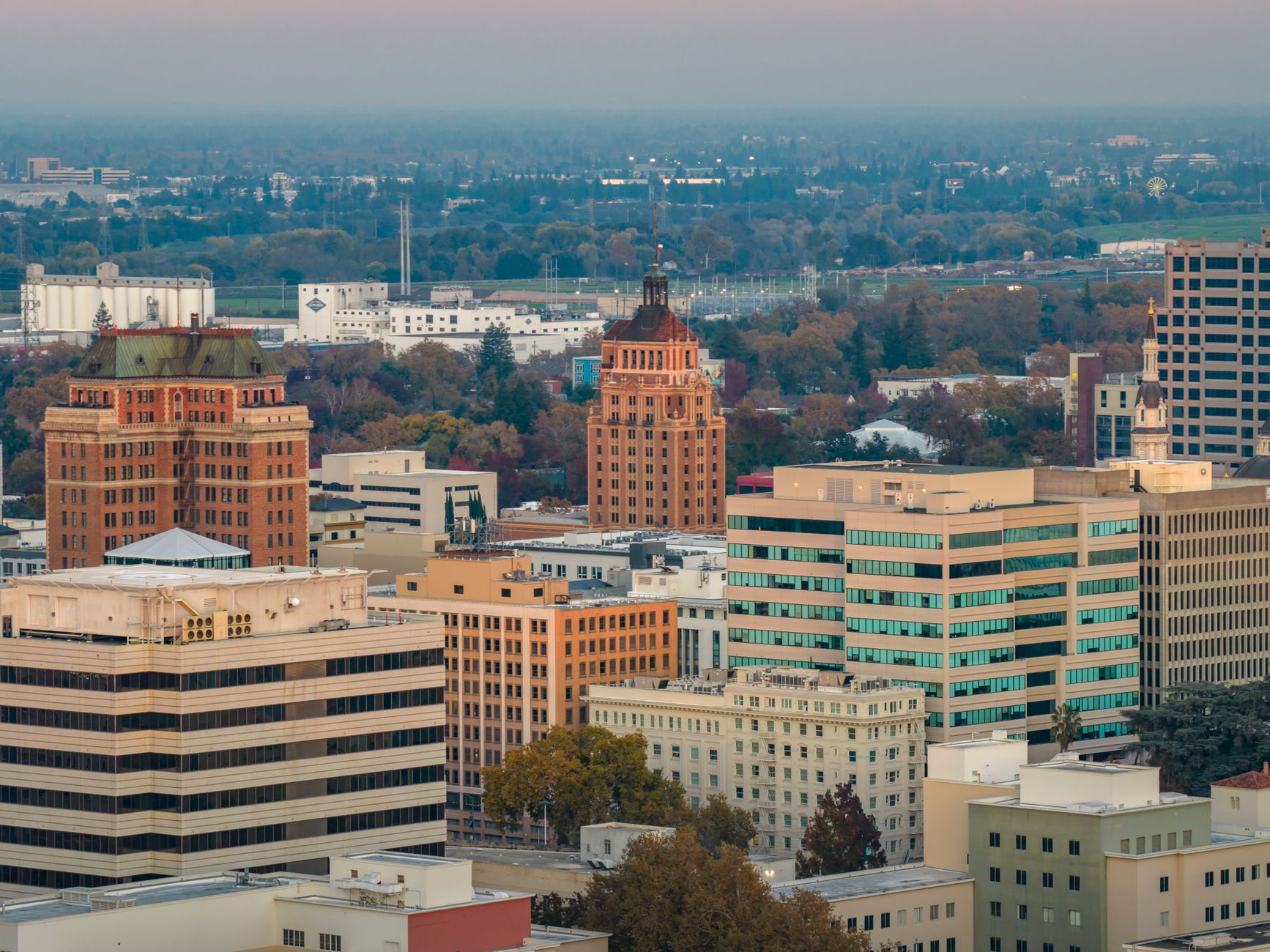
In the suburbs of Sacramento, the investment landscape looks entirely different from the cool coastal cities. While traditional single-family homes in coastal hubs sit on the market for an average of 48 days, Sacramento duplexes and triplexes are trading in under 18 days. A recent transaction at 1204 Q Street in midtown Sacramento closed at $1.15 million, reflecting a net operating income of $82,800 and a cap rate of 7.2 percent. Investors are targeting these multi-unit assets because they capture the massive spillover of renters fleeing the high-cost-of-living coast. This sub-market demonstrates that the California housing market 2026 is highly regionalized. The traditional premium on ocean views has given way to a premium on cash-flow stability. Even farther north, the City of Rocklin is experiencing unprecedented suburban demand. As local families gather for the community events in Rocklin this late July week, agents are reporting multiple-offer scenarios on homes priced between $650,000 and $850,000. These are not speculative flippers; these are long-term institutional buyers and private syndicators who recognize that inland infrastructure expansion is outpacing supply. The key to securing yield in this environment is avoiding the overvalued tertiary towns and focusing on established suburban corridors with diverse employment bases. The numbers do not lie: while luxury coastal properties are seeing price cuts of up to 12 percent, inland multi-family investments are maintaining steady rent growth of 4.8 percent year-over-year.
Coastal Retrenchment and Luxury Arbitrage
To the south, the coastal markets are undergoing a necessary pricing correction that creates a unique arbitrage window for patient capital. In Thousand Oaks, where active lifestyle events are drawing affluent downsizers this summer, the luxury single-family segment is seeing a significant accumulation of inventory. A custom estate at 2400 Lynn Road recently took a $350,000 price cut to settle at a final sales price of $2.95 million. This represents a broader trend across the southern coastal shelf: sellers who held out for 2024 prices are finally capitulating to the reality of the California housing market 2026. This capitulation is exactly what opportunistic private equity funds have been waiting for. By acquiring distressed or stale luxury listings in wealthy enclaves like Thousand Oaks or Palm Springs, these buyers are putting the properties into high-end corporate rental pools. The return on these executive rentals is averaging a premium of 18 percent over standard long-term leases, driven by wealthy remote executives who prefer the flexibility of luxury leasing over direct ownership. This strategy avoids the high financing costs of traditional development while capitalizing on the lack of premium rental supply. It is a calculated bet that coastal land remains the most scarce, and therefore most valuable, asset in the state, even during a temporary macroeconomic cooling period. Investors who acquire these assets at a discount of 10 to 15 percent below replacement cost are positioning themselves for significant capital gains when interest rates eventually adjust.
The macro headlines say the market is frozen, but the micro data reveals a highly profitable migration of coastal capital into inland multi-family yields.
The Tech-Driven Valuation Pivot
To navigate this highly fragmented market, forward-looking syndicators are abandoning outdated appraisal models in favor of advanced predictive analytics. In San Francisco, where tech wealth is concentrated, investment groups are using tools showcased on AIToolsRecap to run real-time automated valuation models. These AI tools process millions of data points—including neighborhood foot traffic, hyper-local zoning changes, and proximity to new commercial developments—to predict property appreciation with 94 percent accuracy. This is particularly valuable in volatile sub-markets like the East Bay, where a single ZIP code can feature a 5 percent decline in one neighborhood and a 12 percent gain in another. For example, in Oakland's 94611 ZIP code, cash buyers are using automated underwriting platforms to lock in off-market deals before they hit the multiple listing service. This technological advantage allows small-scale syndicates to outmaneuver massive institutional funds that are slowed down by traditional, manual underwriting processes. The integration of artificial intelligence into the acquisition pipeline has reduced the typical due diligence period from thirty days to less than seventy-two hours. In a landscape where the aggregate California housing market 2026 data points to a cold market, the speed of execution is what separates profitable operators from those who are paralyzed by macroeconomic headlines. The real story of this year is not the lack of opportunity, but the rapid bifurcation between tech-enabled investors and those relying on legacy spreadsheets.
Frequently Asked Questions
Where are the highest cap rates in the California housing market 2026?
Right now, the highest cap rates are concentrated in the inland sub-markets of Sacramento and the Central Valley, where multi-family assets are delivering yields between 6.8 percent and 7.5 percent. In contrast, coastal cities like San Diego are seeing cap rates hover between 4.1 percent and 4.6 percent, driving income-focused investors to look inland.
How is the artificial intelligence boom impacting California real estate?
The historic $220 billion venture funding flowing into AI startups has created a massive localized wealth effect, particularly in Silicon Valley and San Francisco. This concentration of capital has stabilized luxury home prices in surrounding high-end ZIP codes and accelerated the adoption of automated property underwriting tools across the industry.
Is it better to buy or rent out luxury properties in coastal Southern California?
With the luxury single-family segment experiencing price corrections up to 12 percent in enclaves like Palm Springs, purchasing at a discount and transitioning these properties into high-end executive rental pools is currently yielding an 18 percent premium over standard long-term leasing options.
Ecomstation.ai
