Culver City Leads the Surge: California Housing Market Forecast and the Top Developments Breaking Ground Now
Khushboo Siddhiwala
Aug 1, 2026 · 7 min read
Story
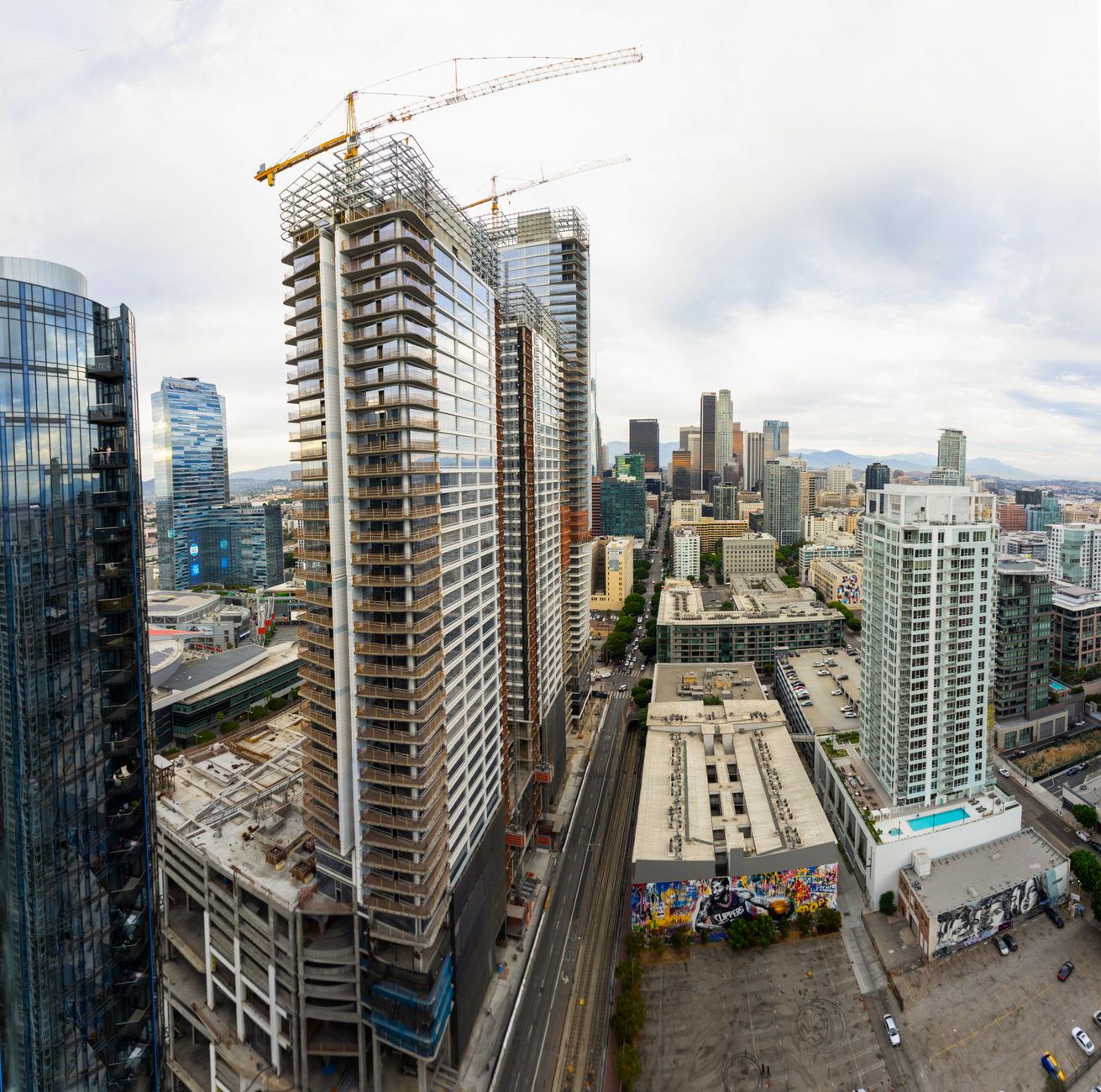
A silent electric crane is swinging a twelve-ton steel beam into place at 8888 Washington Boulevard in Culver City, anchoring a mixed-use project valued at $145 million. This is not a speculative rendering; it is active construction redefining the Westside landscape on this final Friday of July 2026. While headlines claim the state is experiencing a cooling trend, the latest California housing market forecast tells a far more nuanced, hyper-localized story. Smart capital is ignoring the broad-brush negative sentiment and building directly into high-demand pockets. In Culver City, where the median sales price sits stubbornly at $1,650,000, developers are betting heavily on the sustained demand for walkable, transit-oriented creative offices and high-density luxury residential units.
The physical reality of these projects contradicts the macro narratives. Even as the California Association of Realtors releases conservative growth projections, institutional builders are moving forward with aggressive construction timelines. At the intersection of National and Washington, construction crews are working double shifts to deliver 250 premium apartment units by early next year. This activity highlights a critical divergence between existing single-family home sales, which are down 4.2 percent statewide, and the targeted multifamily pipeline. Investors who wait for interest rates to drop below 5.5 percent are missing the ground-floor entries occurring in these micro-markets. The smart play is positioning capital in areas where local job growth, particularly in engineering and digital media, outpaces housing production. In Culver City, that deficit currently stands at approximately 1,200 units, making every new foundation poured a highly secure asset.
Long Beach Rides the Coastal Tech Wave
Down the coast in Long Beach, the local energy is equally charged, driven by both the LBC Vibe summer festival schedule and substantial port-related tech investments. The master-planned development at 100 West Ocean Boulevard is currently breaking ground on a $310 million dual-tower concept that will bring 420 luxury condominiums and a boutique hotel to the downtown waterfront. Long Beach real estate has historically played second fiddle to neighboring coastal hubs, but with the median home price here hitting $845,000 this summer, a 6.8 percent year-over-year increase, the gap is closing rapidly. This is a prime example of the divergence noted in the updated California housing market forecast for the second half of 2026, which highlights coastal submarkets as the primary engines of price resilience.
Local buyers are no longer just looking for suburban escape; they are demanding dense, walkable urban coastal living with immediate access to tech employers. The venture capital flooding into the nearby defense-tech corridor in El Segundo, which grabbed a slice of the record $510 billion global venture funding in the first half of 2026, is directly fueling this buyer pool. Engineers and product managers from startups like Hadrian and Machina Labs are driving up rents in Long Beach by 9.5 percent annually. These high-earning tenants are transforming the local landscape, encouraging developers to break ground on ambitious projects that would have seemed too risky a decade ago.
Silicon Valley Injects AI Capital Into Housing
To understand where the capital for these acquisitions is originating, one must look north to Silicon Valley, specifically Mountain View and San Jose, where the AI boom is transitioning from software code to physical dirt. In San Jose, the massive transit-oriented village near Diridon Station has finally broken ground on its first phase, representing a $1.2 billion capital commitment. This comes as global venture capital hits historic highs, with AI startups pulling in $220 billion in January and February of 2026 alone. This cash is not staying in corporate bank accounts; it is translating directly into home equity. The California housing market forecast must be viewed through the lens of this immense wealth creation.
In ZIP code 95113, the median home price has surged to $1,890,000, representing an 11.2 percent jump since January. Employees at companies deploying new daily-use AI productivity tools like Harvey and Hebbia are using their stock options to secure high-end townhomes and condominiums before construction even finishes. Developers are responding by building highly specific, tech-integrated layouts that feature dedicated, sound-insulated home offices and advanced fiber-optic networks. The demand is so intense that pre-sales for these units are closing within hours of release, demonstrating that the liquidity in the AI sector is directly underwriting the premium housing sector.
San Diego and the Rise of Biotech Hubs
Further south in San Diego, the focus shifts to life sciences and suburban infill. At 10900 North Torrey Pines Road, a major life-science campus expansion is breaking ground alongside 350 executive apartments, a project valued at $450 million. San Diego represents one of the tightest real estate ecosystems in the nation, with inventory levels hovering at a scarce 1.4 months of supply. The localized California housing market forecast for San Diego County predicts a 5.5 percent increase in median values by the end of December, defying the national cooling trends.
The developers currently breaking ground are the ones who will reap the rewards of this supply famine in late 2027 when these projects are finally delivered to a starved market.
This resilience is anchored by high-wage employment. When a young biotech researcher is looking to buy in La Jolla, where the entry-point price for a detached home is now $2.4 million, they are not waiting for macroeconomic shifts. They are competing for the limited inventory that exists today. This is why forward-looking investors are bypassing the generic reports of a cold market and looking at where the concrete is actually being poured. Projects breaking ground in San Diego right now are almost entirely pre-leased or have robust interest lists that exceed capacity by three to one.
The Cold Market Narrative Versus Hard Capital Realities
This brings us to the core contradiction of the current season: while broad industry reports label the state as a cold market due to falling transaction volumes, the actual prices in cities like San Francisco and Sacramento tell an entirely different story. In San Francisco, specifically the Dogpatch neighborhood, a new 150-unit residential development at 2201 Third Street has just commenced excavation, backed by a $115 million construction loan. Meanwhile, in Sacramento, suburban developments in Roseville and Rocklin are expanding rapidly to accommodate the ongoing migration from the Bay Area, with new home permits up 14 percent.
The reality is that transaction volume is low because inventory is locked up by homeowners unwilling to trade their 3 percent mortgages, not because demand has evaporated. The California housing market forecast indicates that this structural supply deficit will protect home values from any significant downward correction. The developers currently breaking ground are the ones who will reap the rewards of this supply famine. Investing in this climate requires a rejection of statewide averages. A smart operator does not buy the index; they buy the zip code. While the average observer tracks federal interest rate announcements, the real players are tracking construction starts in places like Culver City, San Jose, and San Diego. The true opportunity lies in recognizing that the ground broken today represents the premium inventory of tomorrow, priced at a premium that the public market has not yet fully comprehended.
Frequently Asked Questions
Is the California housing market forecast predicting a price crash in late 2026?
No, the current forecast indicates price stability with localized growth rather than a crash. The primary driver of this resilience is the acute supply shortage. While sales volume has decreased due to high mortgage rates, the lack of inventory prevents prices from dropping significantly in high-demand hubs like Culver City and San Jose.
Which California cities are seeing the most new developments breaking ground right now?
The most active development pipelines are concentrated in tech and biotech-rich employment centers. Culver City, San Jose, Long Beach, and San Diego are leading with major mixed-use and transit-oriented projects breaking ground to accommodate the influx of high-earning professionals.
How is the AI venture capital surge impacting local real estate markets?
The record venture funding flowing into AI startups, totaling $220 billion in early 2026, is directly boosting purchasing power in Silicon Valley and Southern California. Highly compensated engineers and executives are using stock-based compensation to purchase premium homes, driving up prices and rental rates in surrounding neighborhoods.
Ecomstation.ai