Culver City Office Deals: Inside California Commercial Real Estate
Khushboo Siddhiwala
Oct 16, 2026 · 5 min read
Story
At 800 North Brand Boulevard in Glendale, a 520,000-square-foot office tower recently changed hands for $62 million, roughly $119 per square foot—less than forty percent of its pre-pandemic valuation. Just fifteen miles south in Culver City, a former media production facility sold for $28.5 million to a residential builder planning a 180-unit apartment complex. Across the state, institutional capital is silently exiting traditional office assets and pouring billions into industrial logistics hubs and urban infill developments. Smart residential buyers and private real estate investors are taking note. The undercurrents driving the California commercial real estate sector are no longer isolated to corporate balance sheets; they are directly dictating residential land values, municipal tax bases, and long-term neighborhood appreciation from Silicon Valley to Orange County.
The San Jose Industrial Boom and the AI Footprint
While high-rise office towers struggle with elevated vacancy rates, industrial assets across Northern California are experiencing an unprecedented surge. Recent Crunchbase data for Q3 2026 posted a record count of billion-dollar funding rounds as the global artificial intelligence race heats up. That massive influx of institutional capital is landing squarely on physical ground in Silicon Valley. Tech companies and data infrastructure providers are leasing millions of square feet of advanced flex and warehouse space, pushing industrial asking rents in San Jose to $2.95 per square foot triple net, an 11.4 percent increase year over year.
In nearby Santa Clara, prime data infrastructure sites are trading for $680 per square foot, setting new valuation benchmarks for light industrial zoning. This aggressive expansion of technology infrastructure is altering nearby residential dynamics. In the San Jose ZIP code of 95134, where tech campuses and new industrial facilities converge, median townhome prices reached $1,240,000 in October 2026, representing a 6.8 percent year-over-year increase despite broader economic volatility. Residential buyers who track where commercial venture capital lands are capturing appreciation months before it reflects in traditional residential MLS statistics.
Distressed Los Angeles Towers and Adaptive Reuse
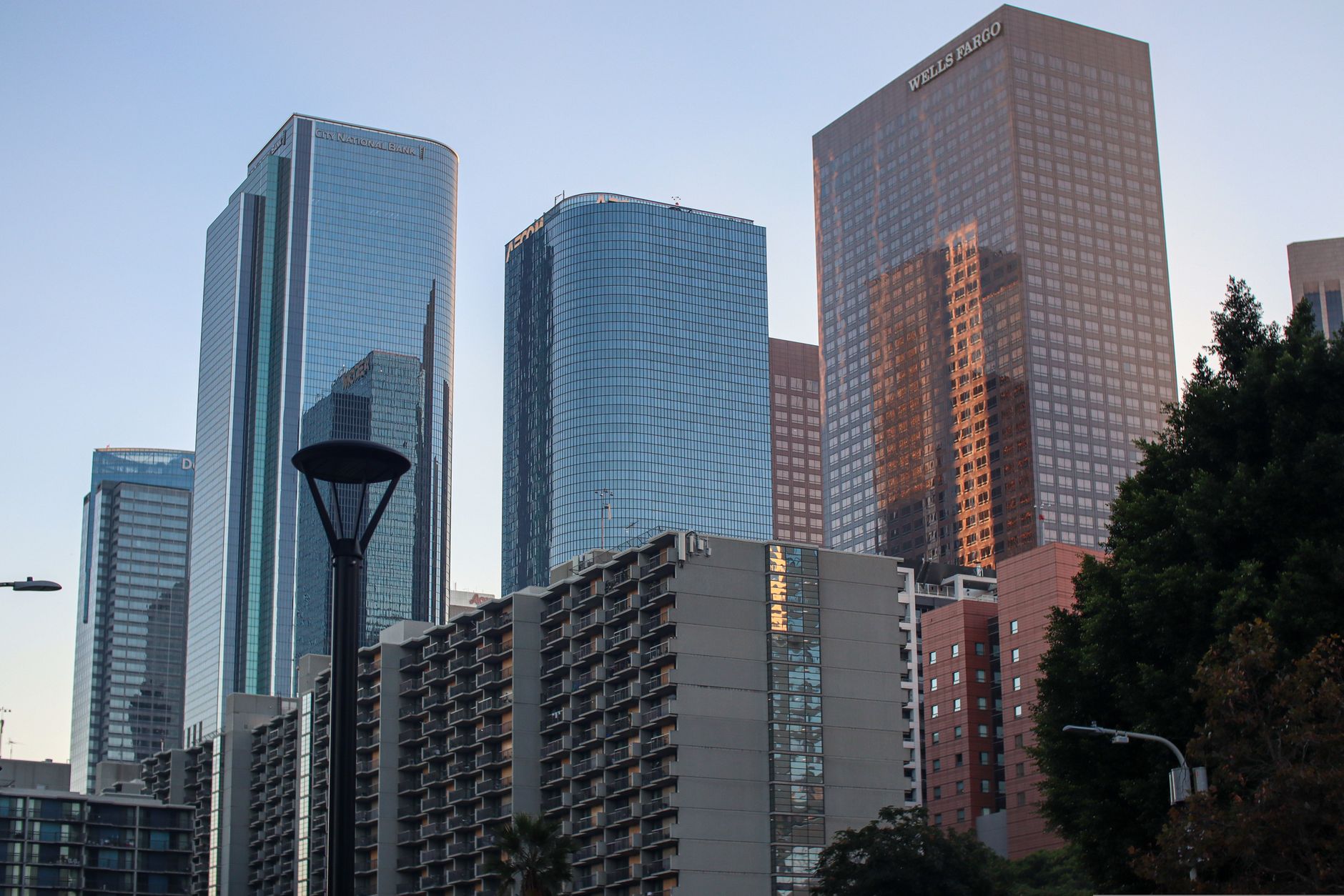
To the south, the narrative flips from hyper-growth industrial acquisition to deep structural repositioning. In Downtown Los Angeles, landmark office towers are selling at prices not seen in two decades. The 52-story tower at 777 South Figueroa Street recently traded for $120 per square foot, a massive haircut from its previous valuation exceeding $380 per square foot. Broader trends across California commercial real estate reveal office vacancy rates in central Los Angeles hovering at 31.5 percent, forcing traditional lenders to liquidate distressed loans at steep write-downs.
Distressed commercial valuations are quietly unlocking land value for urban housing at discounts we have not witnessed since 2008.
This commercial distress is proving to be a catalyst for urban housing density. Developers are seizing discounted high-rise assets to execute adaptive reuse projects, converting vacant office floorplates into high-density residential developments. In Glendale, municipal planners recently approved the conversion of a 340,000-square-foot commercial complex on North Brand Boulevard into 410 residential units. This shift is stabilizing adjacent residential single-family markets in Pasadena and Silver Lake, where supply constraints remain acute and buyers are paying $985 per square foot for pristine single-family homes.
Orange County Retail Shifts and Suburb Power
A parallel shift in California commercial real estate metrics is unfolding in Orange County, where suburban retail corridors are transforming into mixed-use lifestyle destinations. Reports on Housing data for October 2026 shows Orange County active residential inventory rising to 4,820 homes, creating a genuine negotiating market for single-family buyers. At the same time, commercial strip centers along major arteries in Santa Ana and Costa Mesa are being acquired for redevelopment at cap rates averaging 7.4 percent.
In Santa Ana, a 12-acre neighborhood commercial shopping center on 17th Street traded for $41.5 million. The buyer immediately filed plans for a mixed-use village featuring 320 residential units above ground-floor specialty retail. Meanwhile, in Irvine, single-family home prices remain resilient with a median sales price of $1,420,000. Homebuyers who identify neighborhood commercial centers marked for high-density residential master planning are positioning themselves near future amenity-rich transit hubs, ensuring strong long-term equity growth as commercial land shifts to higher-density residential use.
How Commercial Mispricing Creates Residential Alpha
In Northern California, San Francisco presents another clear example of commercial mispricing creating residential opportunity. Financial District office vacancy sits at 35.1 percent, with asset sales bottoming near $185 per square foot. Yet, residential neighborhoods just two miles west, such as Pacific Heights and Noe Valley, continue to command $1,450 per square foot for single-family properties. The market disconnect highlights an essential truth: residential demand for prime California real estate remains structurally decoupled from legacy commercial office space.
Further inland, Sacramento is benefiting from commercial supply chain realignment. Industrial warehouse space in the Natomas corridor is leasing at $1.85 per square foot, driven by agricultural technology and regional distribution operators. This commercial job creation supported a 4.2 percent rise in Sacramento single-family home values through early autumn 2026, pushing the city median home price to $545,000. Smart investors tracking California commercial real estate understand that retail and office distress is not a sign of regional decline, but rather a essential capital reallocation that continually feeds new housing inventory into the state's tightest residential markets.
Frequently Asked Questions
How does commercial real estate distress impact residential home prices in California?
When commercial office buildings sell at significant discounts, developers can acquire land at lower cost basis to build multi-family housing. This long-term influx of residential units helps relieve localized housing shortages, while transformed commercial corridors increase walkable retail amenities and boost surrounding single-family property values.
Why is industrial real estate performing so much better than office space in Silicon Valley?
Record institutional capital funding for artificial intelligence companies has driven demand for physical data infrastructure, specialized hardware labs, and advanced logistics hubs. Cities like San Jose and Santa Clara are seeing elevated lease rates for industrial assets due to tight land constraints and immediate corporate expansion needs.
Is fall 2026 a good time to buy residential property near commercial conversions?
Buying residential property near planned mixed-use commercial conversions allows buyers to purchase before high-density amenities, retail offerings, and streetscape improvements are fully built. These infrastructure investments historically support higher rate of neighborhood appreciation over five- to ten-year holding periods.
Ecomstation.ai