Echo Park's $1.1M Median Is a Lie — In the Best Possible Way
Khushboo Siddhiwala
May 18, 2026 · 4 min read
Story
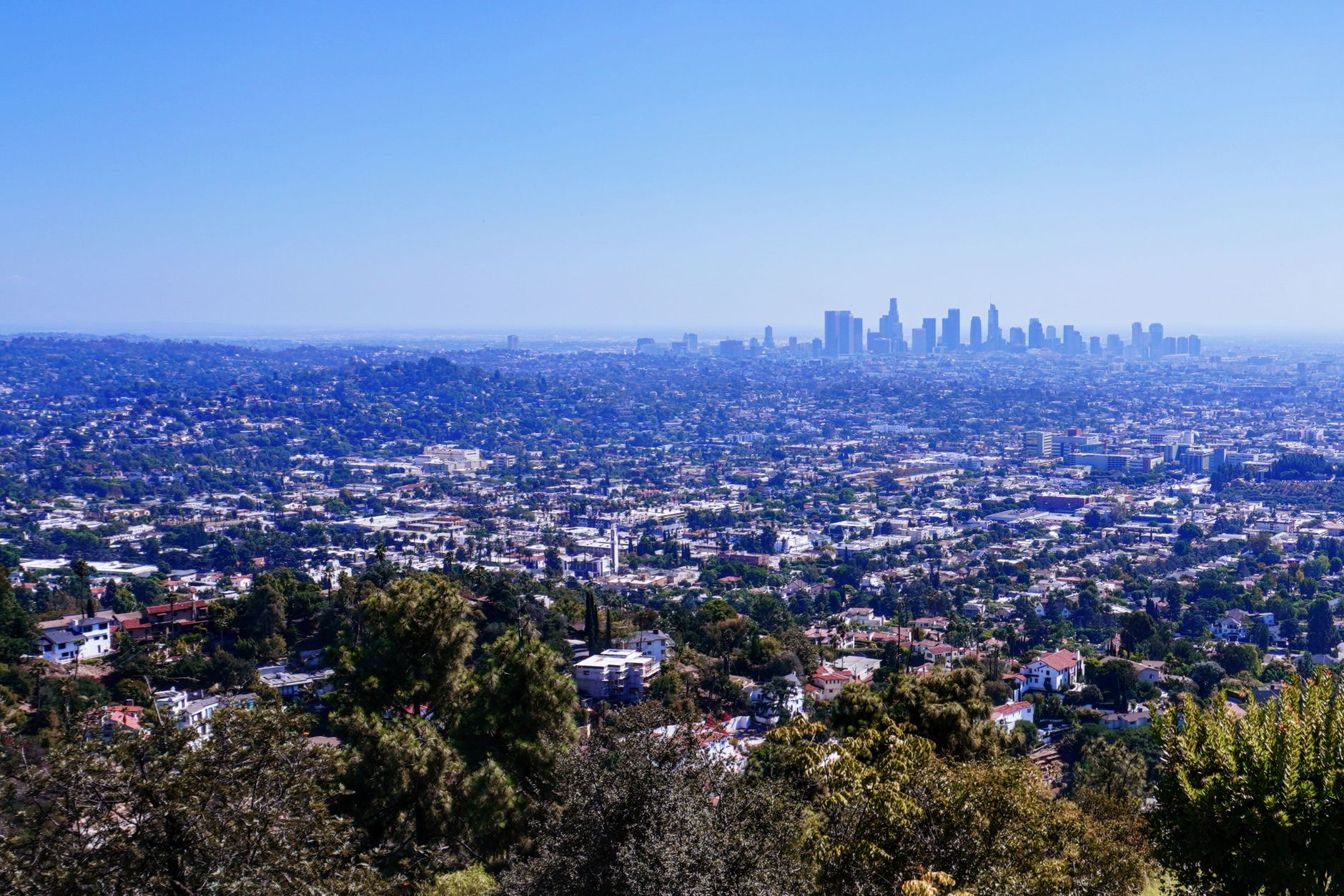
On a Tuesday morning in early May, a craftsman on Lemoyne Street with original hardwood floors, a converted garage studio, and a view of the downtown skyline listed at $1.05 million. By Thursday it had three offers. This is the paradox of Echo Park in 2026: a market that the data says is cooling — median sale prices down 7.8% year-over-year to $1.1 million, price per square foot down a striking 23.9% to $820 — yet one that behaves, on the ground, like a neighborhood that knows something the numbers don't.
The truth is that Echo Park has always been misread by people who look at it from the outside. It was written off as too rough, then celebrated as too trendy, then eulogized after the 2021 encampment clearance at the lake, then discovered again by a new wave of buyers who arrived precisely because everyone else got distracted. That pattern is repeating itself right now, and the window it creates is real.
What those falling price-per-square-foot figures actually reflect is a shift in what's selling. The larger Victorian and Edwardian homes in Angelino Heights — the neighborhood's northeastern crown jewel, one of Los Angeles's oldest intact residential districts — have been slower to move as mortgage rates hovered above six percent through most of 2025. Buyers stretched thin at $1.4 million simply waited. That hesitation pulled the median down. But the underlying demand for Echo Park as a place to live, rather than merely a property to hold, has not softened. If anything, it has clarified.
The people buying here now are a specific type: creative professionals in their mid-thirties who have decided that Silver Lake, their first love, has become too self-congratulatory, and Los Feliz too sedate. They want Echo Park's residual edge — the muralists still working on Sunset, the Tuesday farmers market that feels genuinely local rather than performative, the dive bars that have somehow survived the last decade of LA's relentless upgrading. They also want the lake, which since its 2022 reopening has become one of the most quietly beautiful public spaces in the city: paddle boats, herons, the downtown skyline reflected in the water at dusk.
The housing stock rewards the patient and the imaginative. Angelino Heights delivers the Victorian inventory that Angelenos dream about but rarely find intact — broad porches, decorative gables, rooms with actual architectural intention. Further south and west, toward the Sunset Boulevard corridor, the mix shifts to 1920s bungalows, Spanish colonials, and the occasional mid-century apartment building ripe for the right owner. These are homes that ask something of you. They are not move-in ready in the way that a new Playa Vista townhouse is move-in ready. They require vision, and a tolerance for the neighborhood's ongoing complexity.
Because Echo Park has not been sanitized, and that is the point. There are still encampments on certain blocks. The 110 freeway creates a hard psychological border to the east that some buyers cannot look past. The schools remain a conversation rather than a conclusion. Anyone telling you otherwise is selling you a version of the neighborhood, not the neighborhood itself.
And yet. The Elysian Valley bike path connects Echo Park to Frogtown and the LA River in ways that feel genuinely urban and genuinely Californian at once. The restaurant and bar scene along Sunset and Echo Park Avenue has matured without homogenizing — Ostrich Farm, Lil' Frankie's, the rotating cast of natural wine bars that open and close with the rhythm of someone's ambition. The proximity to downtown, to Silver Lake, to Filipinotown, gives the neighborhood a centrality that becomes more valuable as LA slowly, grudgingly, becomes a city where location relative to other places actually matters.
With LA County's broader median sitting at roughly $920,000 and mortgage rates having eased to the mid-sixes, the arithmetic of Echo Park begins to look less like a consolation prize and more like a considered position. You are buying into a neighborhood that has survived being over-loved and under-resourced, that has a physical anchor in the lake that no amount of market volatility can relocate, and that sits in the path of a westward pressure from downtown that is not going to reverse.
The Lemoyne Street craftsman, incidentally, went for $1.08 million. Over asking. The data, as usual, was telling the wrong story.
Ecomstation.ai