FoodieLand's Three-Day Takeover Is Turning San Jose Airbnbs Into $400-a-Night Gold Mines
Khushboo Siddhiwala
Jun 23, 2026 · 4 min read
Story
A two-bedroom bungalow on Senter Road, less than a mile from the Santa Clara County Fairgrounds, just locked in a three-night booking at $387 per night—roughly what it fetches for an entire week during a typical June. The guest, according to the host's message board post on a Bay Area short-term rental forum, requested early check-in specifically to catch Friday's opening ceremonies at FoodieLand, the roving food festival that has quietly become one of Northern California's most bankable hospitality events.
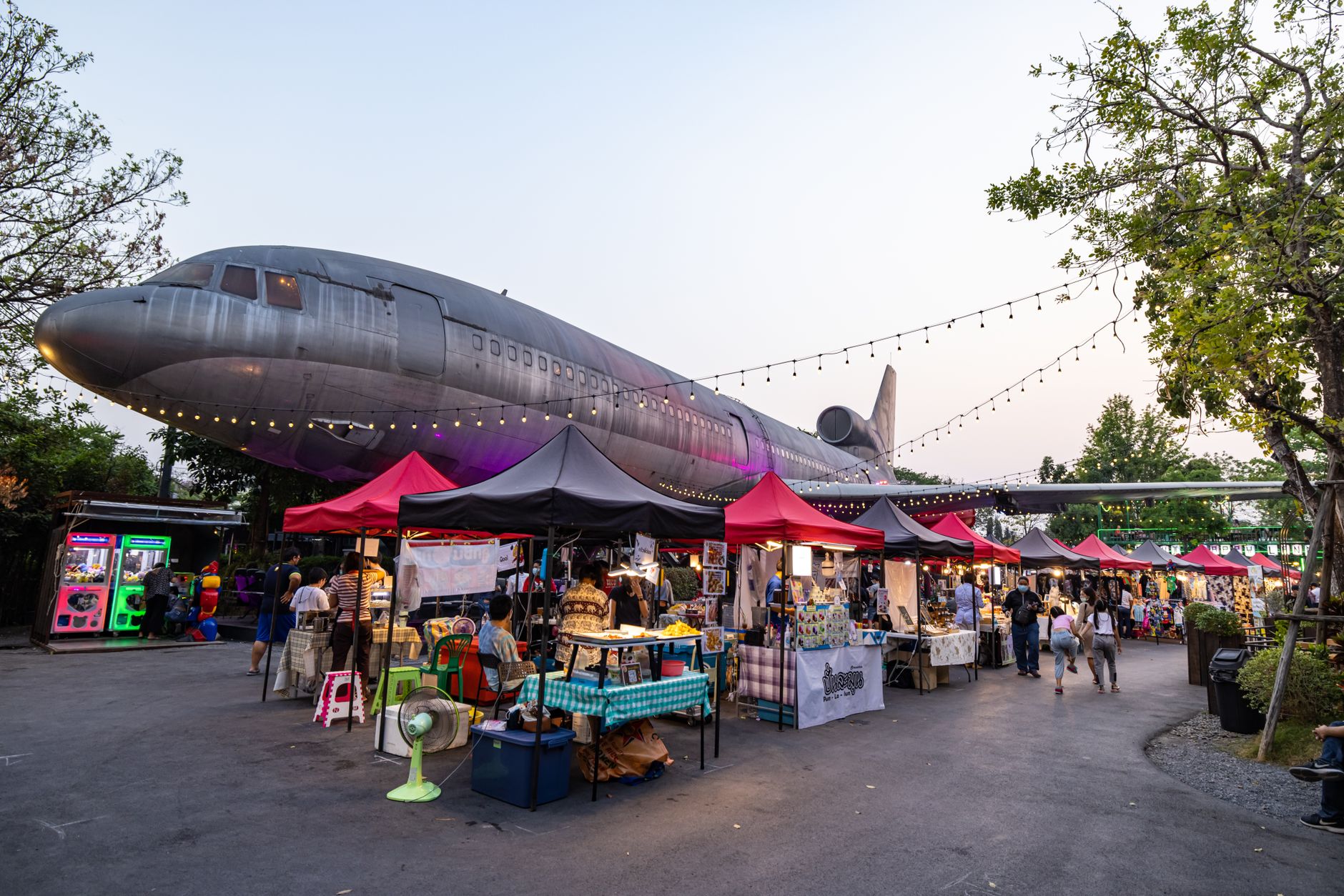
This weekend's FoodieLand San Jose edition, running June 26-28, represents something property investors have been tracking for three years now: the festival circuit as a reliable rent multiplier. What began as a pandemic-era outdoor dining experiment has evolved into a touring phenomenon that draws between 40,000 and 60,000 attendees per market, with San Jose consistently ranking as its strongest California stop. The fairgrounds location at 344 Tully Road sits in a working-class pocket of the city that rarely makes real estate headlines, yet the 95111 ZIP code is experiencing a quiet Airbnb renaissance that deserves attention.
The numbers tell a story that traditional real estate metrics miss entirely. Average daily rates for entire-home rentals within a two-mile radius of the fairgrounds have climbed to $289 for this weekend, according to AirDNA tracking data, compared to a June baseline of $142. Occupancy for Friday through Sunday hit 94 percent by last Tuesday. But here's what the casual observer won't catch: the spillover is pushing demand into neighborhoods that most hospitality analysts would never flag. Alum Rock, traditionally one of San Jose's most overlooked corridors, is seeing $175-per-night bookings for modest three-bedroom homes that struggle to clear $95 on ordinary weekends.
Savvy hosts saw this coming. Maria Delgado, who manages four rental properties across East San Jose, told me she blocked off this weekend's availability in February, before FoodieLand even announced its 2026 California dates. She based her bet on a simple pattern: the festival has returned to Santa Clara County Fairgrounds every June since 2023. "It's more reliable than July Fourth," she said. "Fireworks bring families who want hotels. FoodieLand brings young professionals and influencers who want houses where they can host afterparties."
That demographic insight matters more than the raw booking figures. FoodieLand's audience skews heavily toward millennials and older Gen Z with disposable income—exactly the cohort that prefers whole-home rentals, books through Airbnb over traditional OTAs, and extends trips to explore surrounding neighborhoods. Several hosts reported four and five-night bookings from guests using the festival as an anchor for broader South Bay exploration, with day trips to Santana Row, the Winchester Mystery House, and San Pedro Square Market.
The investment implications extend beyond this single weekend. Santa Clara County's short-term rental regulations remain notably permissive compared to San Francisco's restrictive framework or Los Angeles's enforcement crackdowns. A 1,400-square-foot home on Malabar Way recently traded for $985,000—unremarkable by Bay Area standards—but the buyer, a first-time investor from Seattle, ran projections showing $62,000 in annual gross rental income based heavily on capturing five or six high-yield event weekends throughout the year. The FoodieLand weekend alone, at current rates, would generate roughly $1,200 in pure profit after cleaning and platform fees.
What the broader market hasn't priced in yet is the festival's expansion trajectory. FoodieLand's parent company has been quietly scouting permanent or semi-permanent venue partnerships in three California markets, according to a source familiar with the negotiations. San Jose is reportedly in the conversation for a monthly recurring event starting in 2027, which would fundamentally alter the investment calculus for properties within that two-mile fairgrounds radius.
The traditional real estate playbook says proximity to employment centers, good schools, and transit access drive value. The emerging playbook adds a fourth variable: proximity to recurring experiential events that generate predictable demand spikes. The Coachella effect has been documented for a decade in the Coachella Valley. What's happening around Santa Clara County Fairgrounds suggests the same phenomenon can emerge anywhere a festival circuit establishes reliable annual patterns.
FoodieLand wraps Sunday evening. By Monday morning, Senter Road will return to its ordinary anonymity. But the hosts who understood the calendar will have banked a month's worth of revenue in seventy-two hours—and already be marking next June on their spreadsheets.
Ecomstation.ai