Is Downtown LA Good for Families? Schools, Safety, and Community Guide
Khushboo Siddhiwala
Nov 12, 2026 · 5 min read
Story
At 1100 South Grand Avenue in the South Park district of Downtown LA, a Saturday morning scene defies old regional assumptions. Parents push double strollers past artisanal coffee shops, walking toward green patches near high-rise towers while safety ambassadors patrol clean sidewalks. To answer directly whether Downtown LA is good for families, the clear assessment is yes—for parents who deliberately choose high-density urban convenience over suburban acreage. Raising children in Downtown LA means swapping private backyards for world-class cultural institutions, immediate transit access, and vertical high-rise living. While Los Angeles has long been celebrated for sprawling single-family neighborhoods, the urban core now attracts a dedicated demographic of parents who value walkability, diversity, and central access above traditional suburban norms. However, succeeding as an urban family here requires understanding sharp micro-neighborhood boundaries, selecting school pathways early, and embracing vertical community life.
Micro-Neighborhoods and Safety Realities
Evaluating safety in Downtown LA requires abandoning broad generalizations and examining specific block-by-block boundaries. The neighborhood is not a monolith; safety, cleanliness, and sidewalk atmosphere change dramatically across short distances. South Park, stretching roughly from 9th Street south to Olympic Boulevard and Grand Avenue to Figueroa Street, stands out as the primary haven for families in Downtown LA. Managed by an active Business Improvement District, South Park maintains dedicated 24-hour safety ambassadors, street sweeping, and bright lighting, making evening walks to dinner or neighborhood parks comfortable for parents with young children.
The Arts District offers another distinct pocket for family life in Downtown LA, defined by converted historic brick lofts, lower building heights, and a creative community feel where local business owners recognize resident families. In contrast, zones near the Historic Core, the Financial District transit hubs, and areas bordering Skid Row present persistent urban challenges, including visible homelessness and street-level disruption. Families thriving in Downtown LA cultivate spatial awareness, establishing routine walking paths through well-monitored corridors like Grand Avenue while avoiding areas with higher property crime or foot traffic safety concerns.
Educational Options: Charters, Magnets, and Private Schools
School quality is often the primary concern for parents asking if Downtown LA is good for families. The educational ecosystem in central Los Angeles has expanded significantly, offering a tailored mix of charter schools, specialized magnets, and prestigious private institutions. While traditional neighborhood public schools within the Los Angeles Unified School District present mixed academic ratings, charter options have filled the void with exceptional performance scores.
Downtown Charter Academy and Metro Charter School serve local elementary students with rigorous dual-language immersion programs, STEM-focused curricula, and high parent engagement metrics. For secondary education, families frequently target magnet programs such as the Ramon C. Cortines School of Visual and Performing Arts, situated directly on Grand Avenue, or the nearby Los Angeles County High School for the Arts. Additionally, established private institutions like Loyola High School and urban independent schools provide rigorous college preparatory pathways within minutes of high-rise residences. Securing strong educational outcomes in Downtown LA simply requires active planning, as most successful families apply for charter lotteries or independent school admissions well before kindergarten entry.
Parks, Cultural Infrastructure, and Daily Living
Living in Downtown LA transforms civic cultural hubs into your family's personal playground. The lack of private yards is compensated for by immediate access to four-acre Grand Park, which offers expansive lawns, interactive water fountains, play structures, and year-round community festivals right outside the Music Center. On weekends, local children gather at the Los Angeles Central Library's extensive children's department, explore contemporary art at The Broad, or take music classes near the Walt Disney Concert Hall.
Raising children in Downtown LA requires substituting a private suburban lawn for civic spaces like Grand Park and the world's finest cultural institutions as your backyard.
Beyond major cultural landmarks, daily recreation relies on creative urban spaces. Spring Street Park provides a gated green sanctuary tucked between historic buildings, featuring play structures designed specifically for neighborhood toddlers. Nearby Vista Hermosa Community Park, located just across the western border near Crown Hill, supplies acres of native trails, streams, and soccer fields framing views of the skyline. Building community in Downtown LA happens intentionally across these shared spaces, rooftop residential decks, and active parent networks that organize playdates across neighboring residential towers.
High-Rise Housing and the Urban Family Lifestyle
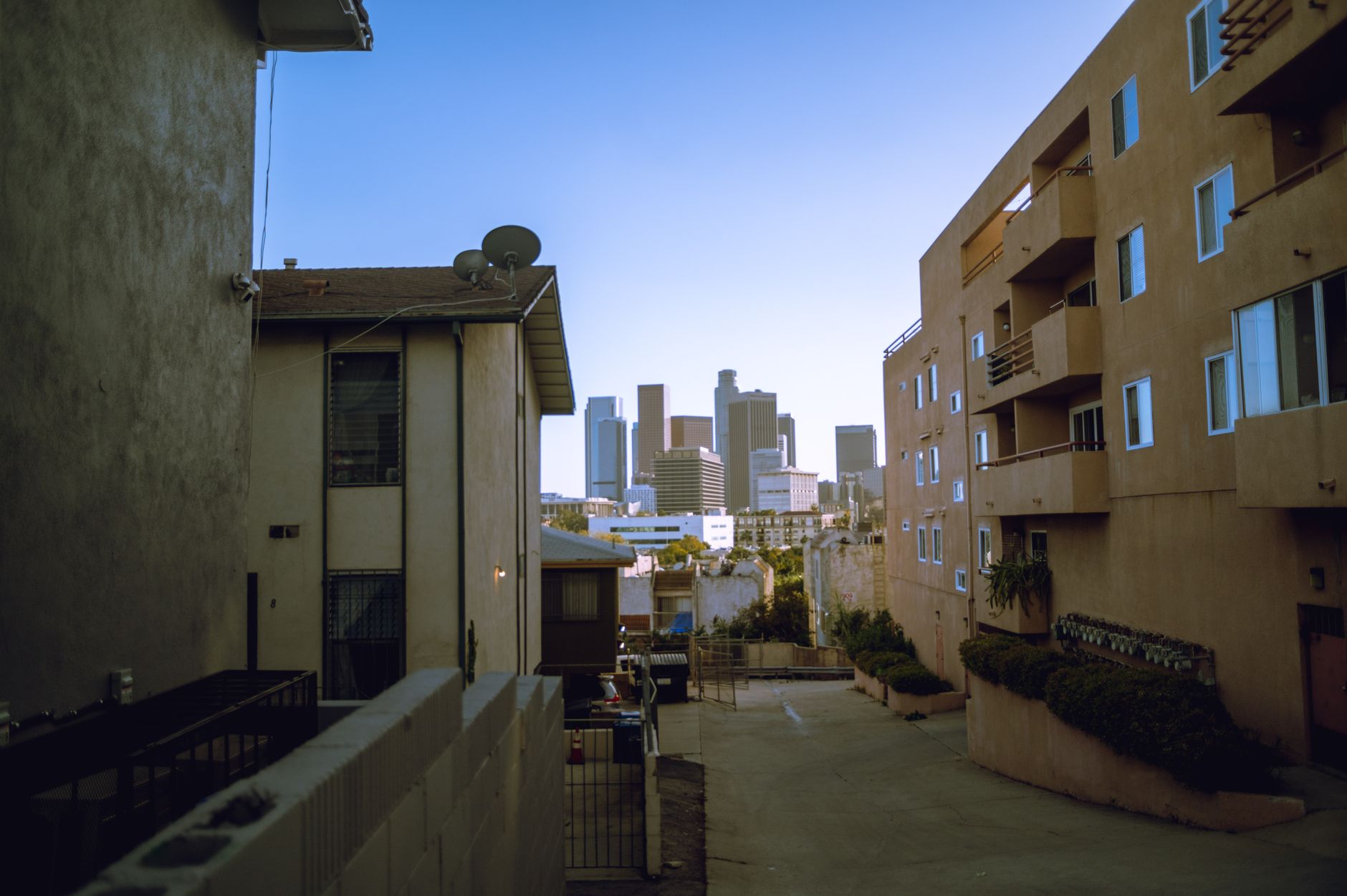
Residential life in Downtown LA is fundamentally vertical. Single-family detached homes do not exist within the neighborhood core, meaning families must embrace luxury high-rise condos or spacious adaptive-reuse lofts. Modern glass towers along Grand Avenue and South Park offer two- and three-bedroom floor plans equipped with round-the-clock concierges, secure subterranean parking, resort-style swimming pools, and dedicated play areas.
While high-rise living eliminates yard maintenance, it introduces unique lifestyle adjustments, such as navigating elevator commutes with strollers and managing noise considerations inherent to open loft architecture in the Arts District. Housing prices per square foot in Downtown LA offer a notable value proposition compared to coastal Westside neighborhoods like Santa Monica or West Hollywood. Families living in Downtown LA gain generous interior square footage and access to building amenities at price points that would purchase far less space in traditional coastal enclaves, allowing urban parents to trade yard work for city convenience.
Frequently Asked Questions
Is Downtown LA safe for walking with young children?
Walking with young children in Downtown LA is very manageable within specific residential micro-neighborhoods like South Park and the Arts District, where dedicated safety ambassadors and active neighborhood improvement districts maintain clean, well-lit sidewalks. However, safety varies block by block, requiring parents to stick to designated residential corridors and maintain standard urban awareness near major transit hubs.
What are the best public school options for families in Downtown LA?
The top-performing public options in Downtown LA are public charter schools, notably Downtown Charter Academy and Metro Charter School, which offer highly rated elementary and middle school programs. For high school students, public magnet programs like the Ramon C. Cortines School of Visual and Performing Arts provide premier specialized education alongside adjacent private high schools.
How do families in Downtown LA get outdoor play space without backyards?
Families in Downtown LA rely on public civic parks like Grand Park and Spring Street Park, alongside nearby green spaces like Vista Hermosa Community Park. Additionally, most modern high-rise residential towers in South Park feature private amenity decks with swimming pools, outdoor lawns, and secure play areas for resident children.
Ecomstation.ai