Sacramento Just Became America's Most In-Demand Metro — And Nobody in LA Saw It Coming
Khushboo Siddhiwala
Jun 24, 2026 · 4 min read
Story
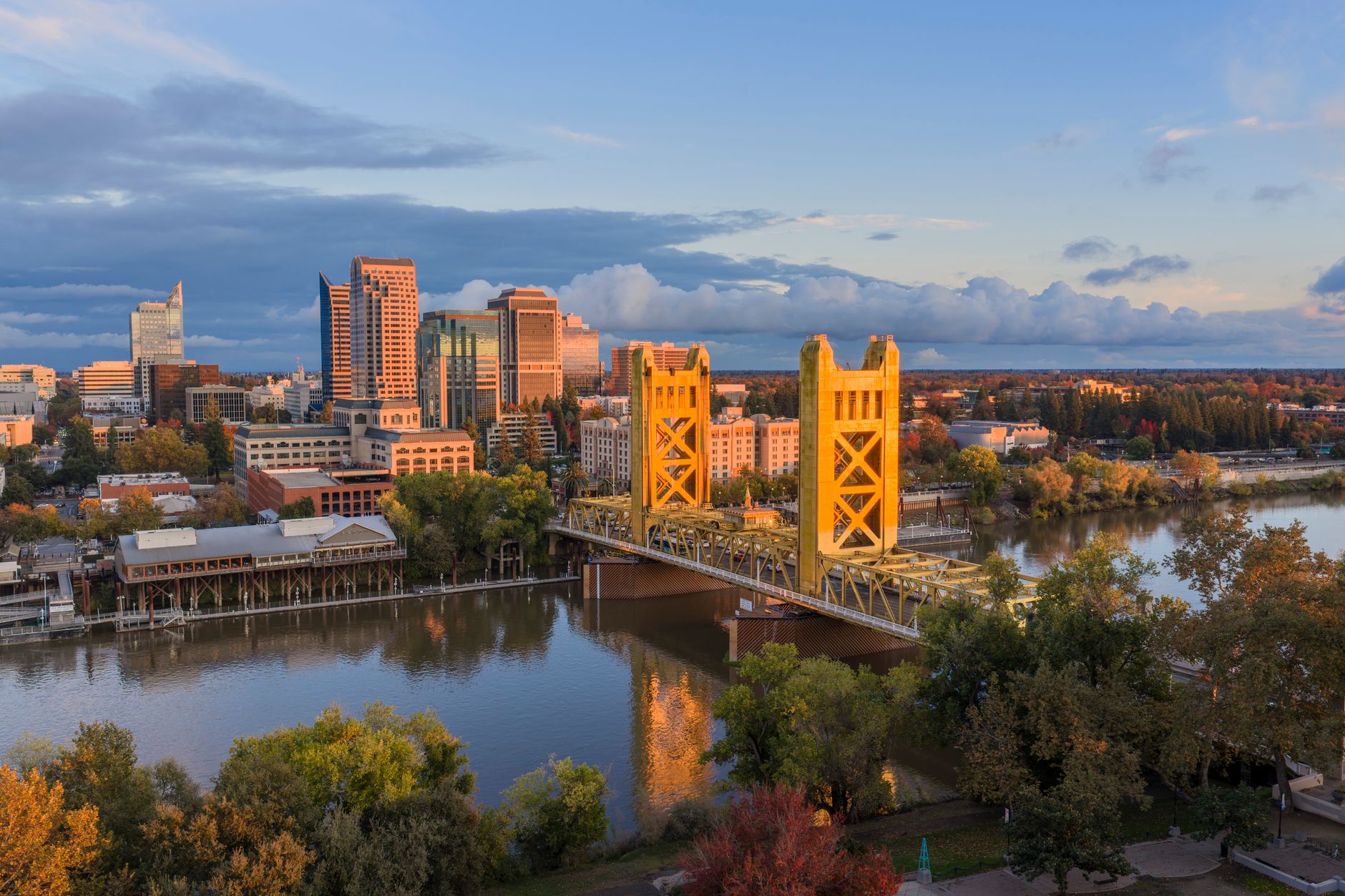
Between December and February, 9,400 more people moved into Sacramento than left — making California's capital the single most in-demand metro in the entire United States, ahead of Phoenix, ahead of Nashville, ahead of every Florida beach town that's been collecting Bay Area refugees for years. Let that settle for a moment. The city that LA agents still describe as "four hours of nothing" just outpaced the entire American Sunbelt.
This is not a typo in the Redfin data. This is California eating itself in real time.
The numbers tell a story of fracture. California's total population slipped by 54,000 people between January 2025 and January 2026, dropping the state just below 39.6 million residents. International migration — once the oxygen that kept California's workforce breathing — has collapsed. Net migration to the entire U.S. fell to just 1.3 million last year, and Census projections show that number cratering to 321,000 by year's end. The foreign-born population has shrunk by 1.5 million under tightened federal policies. For a state that built its modern economy on global talent flowing through SFO and LAX, this is not a demographic blip. It's a structural wound.
But here's what the exodus headlines miss: Californians aren't just leaving California. They're leaving expensive California for cheaper California. They're trading $1.2 million starter homes in Campbell for $485,000 four-bedrooms in Elk Grove. They're swapping $4,200 one-bedrooms in Santa Monica for $2,100 two-bedrooms in Midtown Sacramento. The U-Haul data confirms it — Los Angeles remains a net exporter of residents, but San Diego and San Francisco actually showed positive inflows. The state isn't emptying. It's stratifying.
Sacramento's sudden magnetism makes brutal economic sense. The median home price hovers around $540,000 — roughly half of what you'd pay in San Jose, a third of what Palo Alto demands. Remote work hasn't died; it's just matured. Tech workers who spent 2021 pretending they'd move to Austin actually moved to Folsom. State government employees who got priced out of Bay Area commutes discovered that a Roseville ranch house with a pool costs less than their Fremont condo did. The city's net inflow of 9,400 people in a single quarter isn't speculative migration — it's resignation to economic reality.
And this reshuffling carries consequences that ripple outward. Every family that relocates from Orange County to the Sacramento suburbs takes their purchasing power with them. They bid up homes in Natomas and Land Park, pushing longtime residents further into Stockton, Modesto, the exurban frontier. The same affordability crisis that created the exodus recreates itself in miniature wherever the exodus lands. Sacramento's median price has climbed 6% year-over-year precisely because it became the destination. Give it five years, and we'll be writing about people fleeing Sacramento for Redding.
The working-class Californians caught in this churn don't get the lifestyle-magazine treatment. The Los Angeles Times noted that the state's exodus isn't just billionaires decamping for tax-free Nevada ranches — it's regular people renting U-Hauls, doing the math on gas prices and grocery bills and deciding that proximity to family in Texas outweighs proximity to the Pacific. These aren't ideological refugees. They're household-budget refugees. And when they leave, they take service workers, teachers, nurses — the connective tissue that keeps expensive cities functional.
What emerges is a California that looks increasingly like two states wearing the same outline. Coastal California — from San Diego's La Jolla up through Santa Barbara and into San Francisco's western neighborhoods — remains globally desirable, globally priced, and increasingly populated by the globally wealthy. Interior California absorbs everyone else, its housing stock appreciating steadily as demand concentrates, its infrastructure straining under population it never planned for.
The immigration collapse accelerates this split. Without foreign-born workers filling agricultural jobs in the Central Valley, construction crews in the Inland Empire, and tech roles in Silicon Valley, labor costs rise, housing production slows, and the affordability crisis deepens. California has always relied on global migration to offset domestic outflows. Remove that counterweight, and the internal reshuffling becomes the only game in town.
Sacramento didn't become America's hottest metro because anyone fell in love with the Delta breeze. It became the hottest metro because 9,400 people did the math and realized that staying in California meant leaving the California they knew. The state isn't dying. It's reorganizing around the only resource that still scales: distance from the coast.
Ecomstation.ai