Sacramento Just Became California's Hottest Destination—And the Bay Area Is Paying the Price
Khushboo Siddhiwala
Jun 23, 2026 · 4 min read
Story
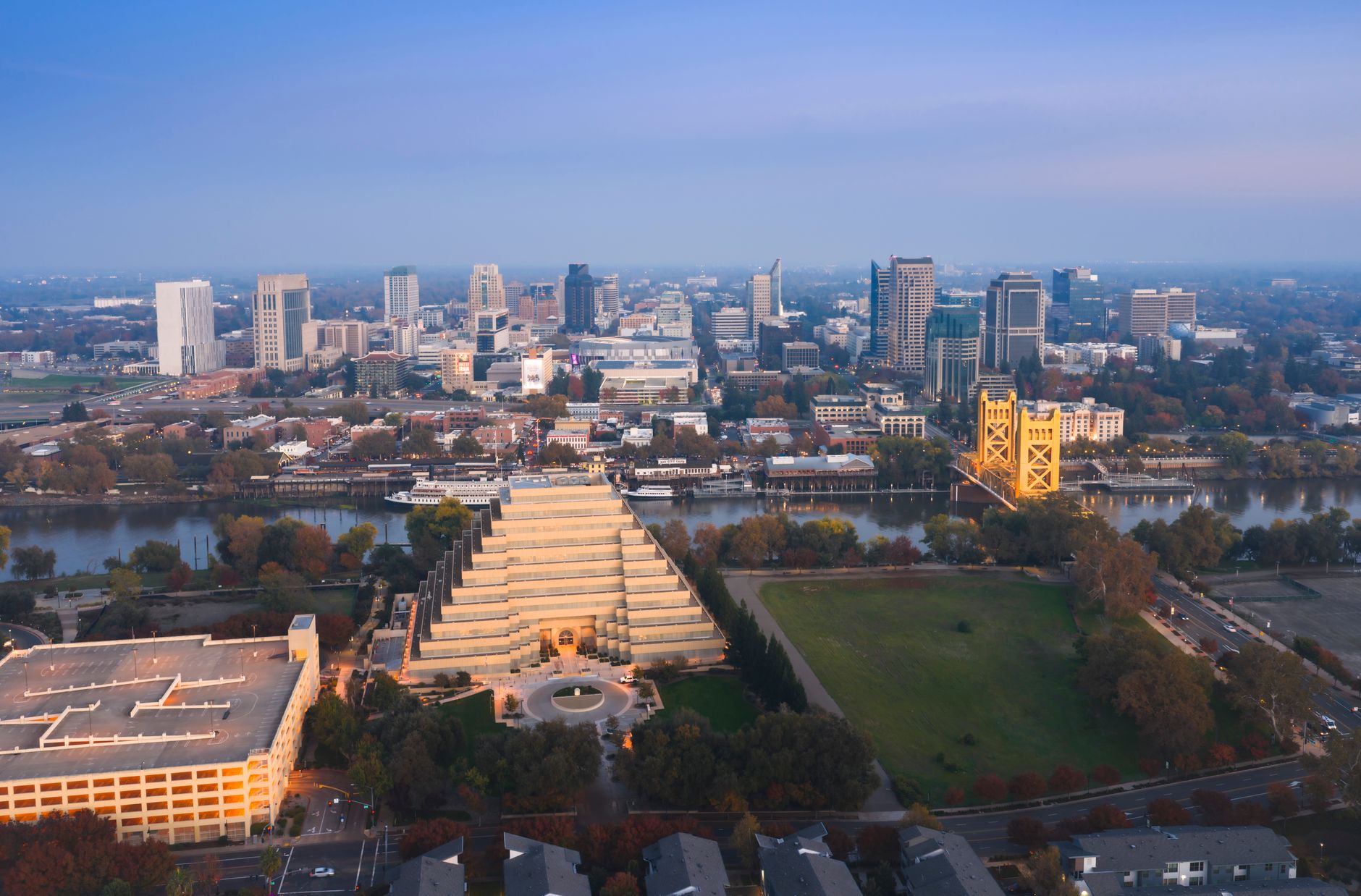
Between December and February, 9,400 people moved to Sacramento from other parts of California and beyond—more than Phoenix, more than Nashville, more than any Florida beach town promising low taxes and easy living. The state capital, long dismissed as a government town where ambition goes to die, has quietly become the single most popular domestic migration destination in America.
This isn't a fluke. It's a verdict.
While Sacramento absorbs transplants at a rate that would make Austin jealous, San Francisco's 94116 ZIP code—spanning the Sunset, Inner Parkside, and Forest Hill neighborhoods—has watched home values crater by 10.2%, the steepest decline in the entire Bay Area. That's not a rounding error. That's a neighborhood losing a decade of appreciation in twelve months.
The conventional wisdom says California real estate only goes up. The data says something more uncomfortable: California is splitting into two states, and the fault line runs straight through the price-per-square-foot.
Consider the physics of what's happening. San Francisco's western neighborhoods, once celebrated for their fog-shrouded Victorian charm and proximity to Ocean Beach, are now defined by something less romantic: they're too expensive to justify and too far from anywhere that matters. The 94116 ZIP code sits roughly forty minutes from downtown in traffic, longer if MUNI is having one of its days. For $1.4 million—the typical asking price for a modest single-family home there—buyers are increasingly asking what exactly they're getting beyond earthquake risk and marine layer.
Sacramento offers a different calculation entirely. A four-bedroom house in Land Park or East Sacramento runs $650,000 to $800,000. You get a yard. You get parking. You get summers that actually feel like summer. And increasingly, you get a remote-work-friendly lifestyle that doesn't require choosing between a mortgage payment and a retirement account.
The San Jose metro area tells a more nuanced story—values rose just over 1% year-over-year, a number that looks healthy until you remember that the same ZIP codes were posting double-digit gains three years ago. Silicon Valley hasn't collapsed; it's simply stopped defying gravity. The companies that once paid twenty-five-year-olds enough to bid $200,000 over asking have quietly tightened budgets, and the ripple effects are showing up in days-on-market figures and price cuts that would have been unthinkable in 2021.
Southern California presents its own contradictions. Los Angeles saw 835 people arrive from San Francisco between October and December—San Francisco, the city that spent years mocking LA's sprawl and superficiality, is now exporting its residents south. The January wildfires have added chaos to this already complicated picture, with ZIP codes adjacent to Pacific Palisades and Altadena seeing rental pressure spike while the broader market tries to absorb displaced families competing for shrinking inventory.
But here's what the migration data reveals that the price charts don't: Sacramento's rise isn't about Sacramento at all. It's about what California's coastal cities have become. The 9,400 people who moved to the capital weren't chasing some vision of Sacramento excellence. They were fleeing a version of California that stopped making sense—where a household income of $200,000 qualifies you for affordable housing programs and where your commute costs more annually than your parents paid for their first car.
The San Francisco metro area lost 2.5% of its home value from June 2024 to June 2025. That's $50,000 evaporating from the typical property. For longtime owners sitting on massive equity, it's an accounting abstraction. For anyone who bought in 2021 or 2022, it's the beginning of an underwater conversation they never expected to have.
Real estate has always been about stories—the story you tell yourself about where you live and who you're becoming by living there. San Francisco's story was about being at the center of the future. Sacramento's story was about compromise. But stories change when the math stops working.
The 10.2% decline in the Sunset isn't a housing correction. It's a generation of Californians quietly admitting that the coastal dream their parents sold them comes with terms and conditions that no longer apply. Sacramento didn't become desirable. The places that looked down on it simply became impossible.
In migration patterns, as in real estate, the most honest signal is where people actually go when they have to choose. Right now, 9,400 of them are choosing a city with no ocean, no tech headquarters, and no cultural cachet—and that tells you everything about what California's future actually looks like.
Ecomstation.ai