The Hoteliers Knew Something: Why the $6.6M Casa Princeton Listing Says Everything About Santa Monica Right Now
Khushboo Siddhiwala
May 5, 2026 · 4 min read
Story
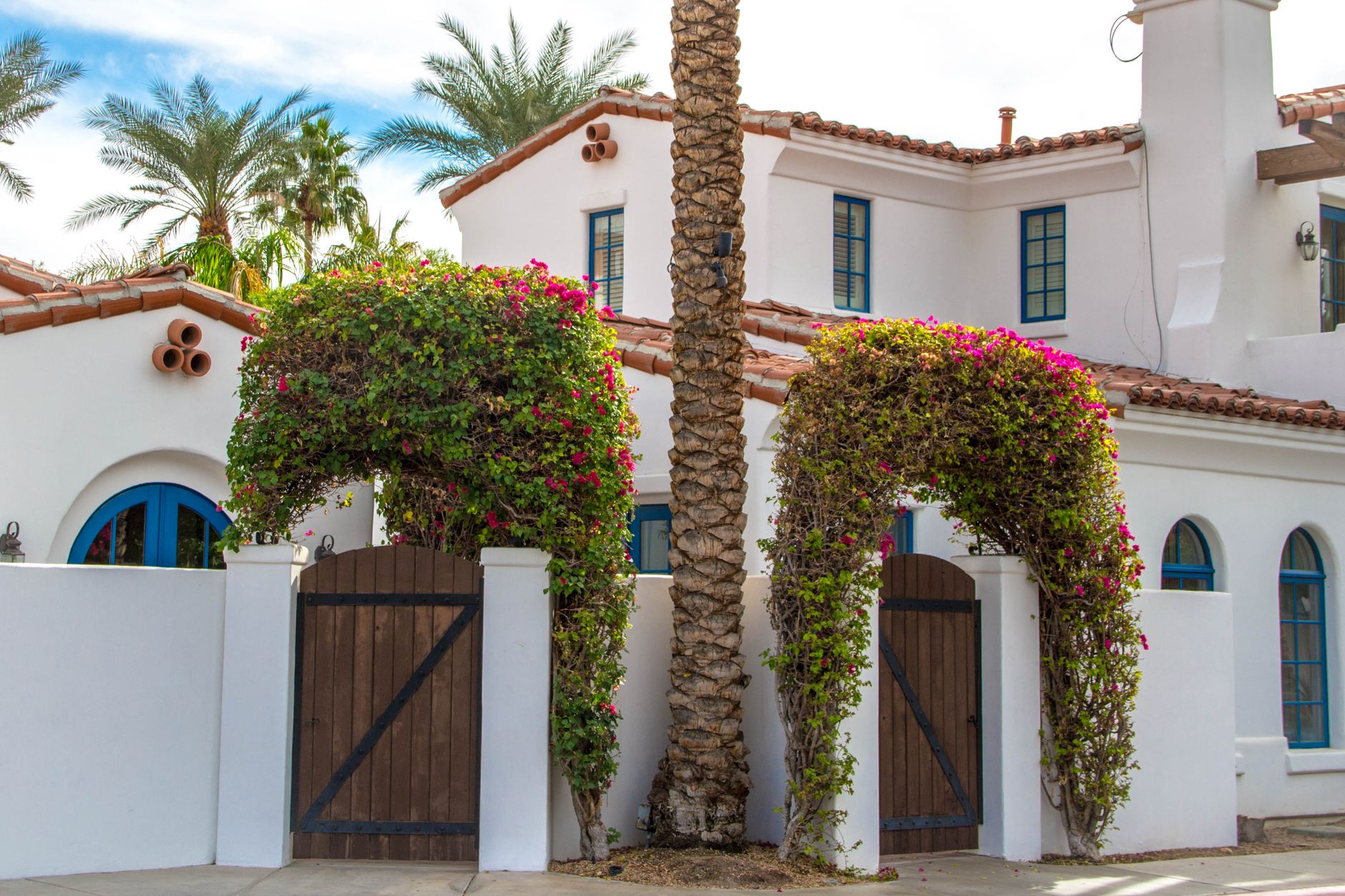
Last month, Matthew and Emma Goodwin — the husband-and-wife team who transformed Malibu's Surfrider into one of California's most quietly coveted boutique hotels — listed their personal Santa Monica compound for $6.6 million. Casa Princeton, a restored historic property on more than an acre, comes with a main house, a guesthouse, and a pool house, all of it carrying the considered, unhurried aesthetic that has made the Goodwins famous in hospitality circles. That they chose to sell it now, in the spring of 2026, is not incidental. It is a signal worth reading carefully.
Santa Monica has spent the past eighteen months in an unusual negotiation with itself. The median list price has softened to $1,825,000 — down from $1,915,000 at the start of 2025 — and properties are sitting an average of 52 days on market before finding buyers. Inventory remains 14 percent below the ten-year average, which means the softening is less a correction than a hesitation. The city has not decided what it wants to be next, and the market is reflecting that uncertainty in real time.
And yet the hesitation is not uniform. North of Montana, the neighborhood's enduring gold standard, continues to command prices that defy gravity and defy doubt. Ocean Park, which has quietly reinvented itself as a high-density village for the Silicon Beach professional class, is now trading at roughly $1,875 per square foot — nearly matching its more patrician northern neighbor. The tech workers who flood the Lululemon on Main Street on Saturday mornings, who have turned the farmers market into a weekly social ritual, have decided that Ocean Park's artsy coastal density is worth a premium. They are not wrong.
Sunset Park tells a different story — one that is, in its way, more interesting. Here, on 6,500-square-foot lots priced at approximately $1,400 per square foot, something closer to a genuine neighborhood life persists. Families with strollers and rescue dogs, bungalows with Meyer lemon trees in the side yard, blocks where people still know their neighbors' names. Sunset Park is where Santa Monica stops performing and simply lives, and for that reason it may represent the city's most undervalued proposition in 2026.
The editorial point of view this magazine has held for two years now — and which the data continues to validate — is that Santa Monica is a city caught between its mythologies. The first mythology is Malibu adjacency: the idea that Santa Monica is the civilized, walkable version of the coastal dream, a place where you can have the Pacific and a decent school district and an Erewhon within reasonable distance. The second mythology is Silicon Beach legitimacy: the notion that the tech economy has permanently reshaped the city's demographics and, by extension, its price floor.
Both mythologies are partially true, which is what makes them dangerous. The Malibu adjacency premium is real but fragile — it evaporates quickly when Malibu itself corrects, as it did following last year's wildfire insurance disruptions that pushed several coastal buyers back toward Santa Monica as a supposedly safer harbor. The Silicon Beach premium is real but geographically concentrated; it explains Ocean Park's extraordinary price-per-square-foot without explaining why a three-bedroom in Mid-City Santa Monica might sit for two months before receiving an offer.
The Goodwin listing clarifies something important in this noise. When people with genuine taste and genuine market intelligence — hoteliers who have spent careers understanding what makes a place worth returning to — choose this moment to monetize their most personal asset, it suggests a belief that the ceiling is nearer than the floor. That is not a pessimistic reading. It is a sophisticated one.
For the buyer with a ten-year horizon and a preference for neighborhoods that improve rather than simply appreciate, Sunset Park remains the honest answer. For the buyer who wants to be close to the cultural energy that Ocean Park has assembled — the galleries, the coffee shops, the particular quality of afternoon light on Main Street — the current 52-day average DOM is a gift that the market will not offer indefinitely. And for the buyer who wants the full North of Montana statement, the slight softening in median prices is the first breathing room that neighborhood has offered in half a decade.
Santa Monica is not on sale. But for the first time in years, it is negotiable. The Goodwins understood that. The question is whether you do too.
Ecomstation.ai