Tustin Shakes Up California Housing Market Trends With New Builds
Khushboo Siddhiwala
Aug 9, 2026 · 7 min read
Story
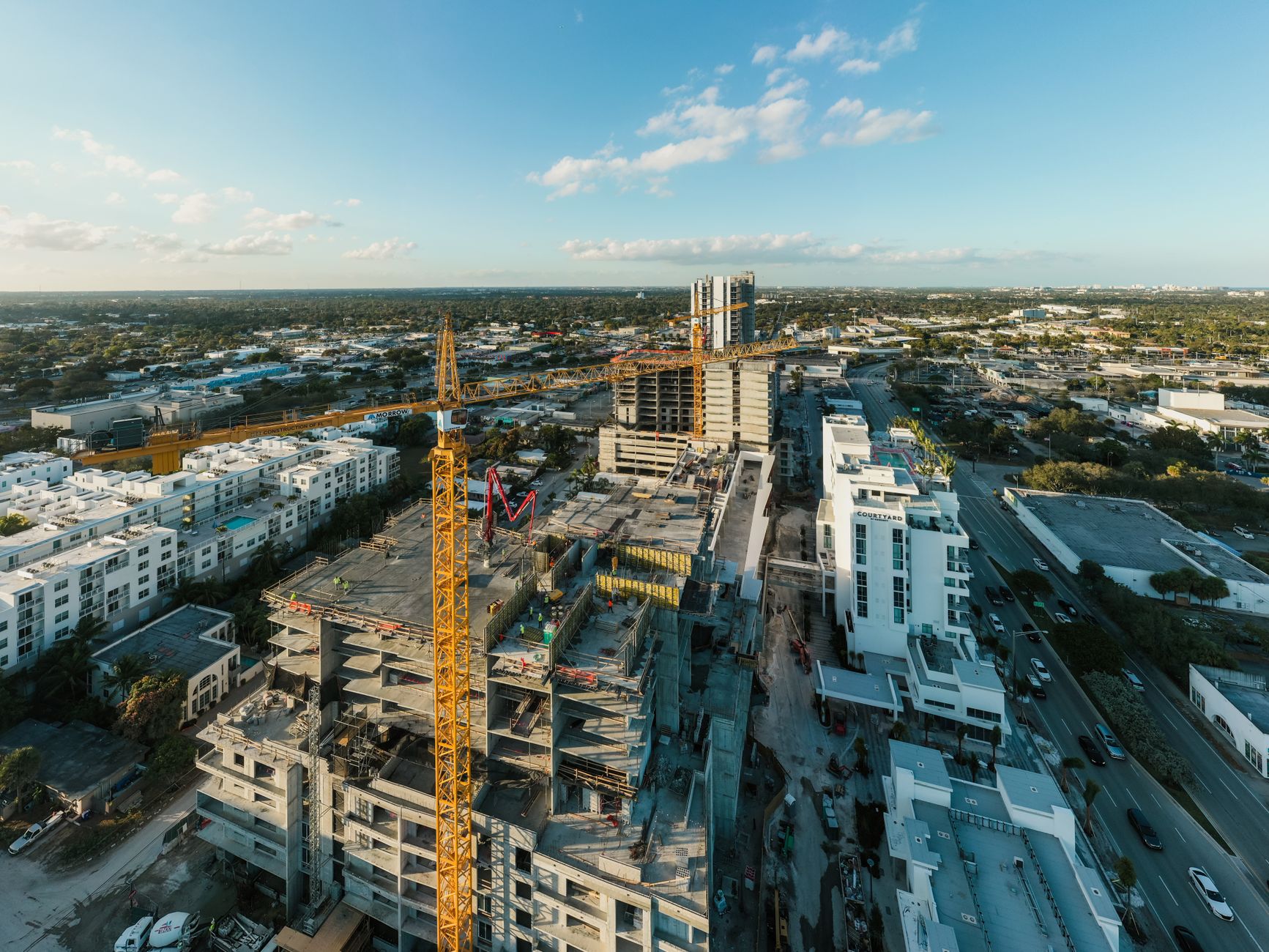
On the dusty, sun-baked asphalt of 2400 District Avenue in Tustin, the heavy machinery of McCarthy Building Companies is currently tearing through the foundations of what will soon become the Residences at The District. This massive local endeavor is reshaping the surrounding master-planned community. As the first of six massive parking structures begins its vertical climb, Orange County investors are watching this site as a bellwether for wider California housing market trends. The multi-phase project, greenlit by the local municipality, is a direct answer to the chronic supply shortage that has kept suburban home valuations stubbornly high. In this submarket, where single-family homes frequently trade above the $1.3 million mark, this construction represents a critical pivot toward high-density suburban luxury living. Observers who previously claimed that the state was on the brink of an inventory-driven implosion are now forced to reckon with these heavy-duty capital deployments. To make sense of the macro landscape, one must look past statewide averages and focus on the hyper-local nodes where ground is actually being broken. The capital is no longer waiting for interest rates to return to historical floors; instead, it is forcing supply into high-value pockets where demand has been coiled like a spring for three years. By analyzing these specific commercial corridors, we find a market that is not stalling, but rather restructuring itself around high-density transit hubs and modernized zoning guidelines.
Submarket Shifts and the Push for Orange County Density
The activity at the Tustin site is not an isolated development anomaly. Rather, it is a key piece of the puzzle explaining why recent data contradicts the narrative that the state is entering a prolonged cooling cycle. In Hayward, the median home price has climbed to $890,000 as of August 2026, marking a 4.8% increase year-over-year. This steady upward trajectory across the East Bay reflects a broader pattern where outer-ring suburbs are no longer cheap alternatives, but primary targets for institutional builders. The Tustin project itself introduces thousands of residential units directly adjacent to established commercial hubs, creating a self-sustaining ecosystem that insulates local valuations from broader macroeconomic volatility. By placing high-density residential properties next to existing retail centers, developers are bypassing the traditional zoning bottlenecks that have historically strangled supply in Southern California. The physical reality of concrete mixers pouring foundations at the intersection of Jamboree Road and Barranca Parkway proves that institutional money is betting on long-term appreciation rather than short-term liquidation. This spatial reorganization is fundamentally rewriting the playbook for local acquisitions, pushing capital out of over-allocated core urban areas and into secondary nodes that offer direct highway and transit access. These shifts define the modern California housing market trends we observe today, where accessibility triumphs over square footage. Homebuyers who are waiting for a systemic price collapse are missing the structural reality: supply is being built for an affluent, mobile demographic that values convenience over sprawling lots.
NorCal Suburbs Capture the Infill Demand Surge
Further north, the focus shifts to Solano County, where a different scale of transformation is unfolding. In Vacaville, the commencement of the Victory Gardens project represents a highly targeted attempt to address specialized housing needs through a 208-unit affordable development. Managed in tandem by Mutual Housing California and Solano-Napa Habitat for Humanity, this project highlights how sub-markets are diversifying to capture state and federal grants. In these secondary corridors, the velocity of inventory movement is remarkably swift. Homes in this region are currently averaging just 22 days on the market, a stark contrast to some of the coastal metros where inventory sits for over 45 days. Critics who point to statewide transaction volumes falling by 12% ignore these localized hot spots where demand remains insatiable. The price differential remains the primary driver. With the median price in San Francisco hovering around $1.6 million, the relative affordability of these northern infill projects, where new townhomes are slated to enter the market at $620,000, provides a natural safety valve for middle-class buyers. This shifting geographic focus is one of the most critical aspects of current California housing market trends, showing that capital is migrating where land is still available and local councils are receptive to growth. As suburban centers expand, they pull economic activity with them, permanently altering the historical hub-and-spoke commuter dynamic, shaping real estate in Vacaville.
Shifting development patterns away from dense coastal cores to suburban infill projects is no longer a temporary hedge, but the central strategy for surviving the current inventory crunch.
Regulatory Hurdles and the New Mandates of 2026
The mechanics of building in California changed permanently this year with the implementation of the new 2026 construction laws. In Davis, developers are restructuring their joint venture agreements to comply with new statutory limits on retention on private projects. This legislation restricts cash retention to 5%, accelerating cash flow to subcontractors but forcing developers to maintain larger liquid reserves. In Davis, where projects like the West Davis Active Adult Community are navigating late-stage approvals, these financial requirements have pushed smaller builders out of the market, leaving the field open to well-capitalized institutional players. The speed of change is visible in the local municipal registries. Davis city planners report that while single-family permits are down by 15% due to these increased compliance costs, multifamily project submissions have surged by 22%. This regulatory pressure has forced a higher degree of professionalization across the entire development sector, skewing traditional California housing market trends toward institutional dominance. Builders can no longer afford the luxury of prolonged planning phases. To maintain profitability under the new retention rules, project managers are turning to advanced construction sequencing and pre-fabricated building components, turning construction sites into high-precision assembly lines where delays threaten capitalization.
Artificial Intelligence and Modern Project Delivery
To offset these rising regulatory costs and labor shortages, developers in San Jose are integrating advanced technology directly into their project management workflows. The recent surge in AI startup funding, including massive venture rounds for workflow automation platforms, is finding practical application on active job sites. Platforms like PlanGrid and newer specialized scheduling engines are allowing project managers to run predictive simulations on material deliveries and city inspection timelines. By processing municipal zoning archives and historical building inspector patterns, these tools can predict inspection delays with 87% accuracy. In San Jose, where a delay on a 300-unit mixed-use development can cost up to $15,000 per day in carrying costs, this technology is the difference between a profitable venture and a distressed asset. The adoption of these systems is altering how developers underwrite projects. Instead of factoring in a standard 180-day buffer for local entitlement processes, tech-forward builders are compressing their pre-construction phases by 30%. This systematic reduction in friction is helping stabilize the cost of new housing delivery, ensuring that even as labor and materials rise, the end product remains viable for the consumer. It is a quiet revolution that is quietly stabilizing the supply side of California housing market trends. The ultimate winners of this development cycle will not be those who build the largest estates, but those who build with the tightest digital efficiency.
Frequently Asked Questions
How are the new 2026 retention laws affecting California home construction? The new legislation caps retention on private construction projects at 5%. While this improves immediate cash flow for subcontractors, it requires developers to carry larger liquid cash reserves, which has accelerated a shift toward well-capitalized institutional builders and consolidated the market.
Why are suburban development projects like the one in Tustin expanding right now? Suburban projects are expanding because developers are targeting high-density infill locations adjacent to existing commercial hubs. This strategy bypasses coastal zoning gridlock and places new housing supply directly in areas with robust local employment bases and high median home values.
What impact is artificial intelligence having on active construction projects? Developers are using predictive AI scheduling tools to analyze municipal zoning archives and historical inspection data. This allows builders to anticipate municipal inspection delays with high accuracy, reducing project carrying costs by compressing pre-construction timelines by up to 30%.
Ecomstation.ai