Why Silicon Valley AI Startups Are Shaking Up San Francisco This Week
Khushboo Siddhiwala
Aug 28, 2026 · 7 min read
Story
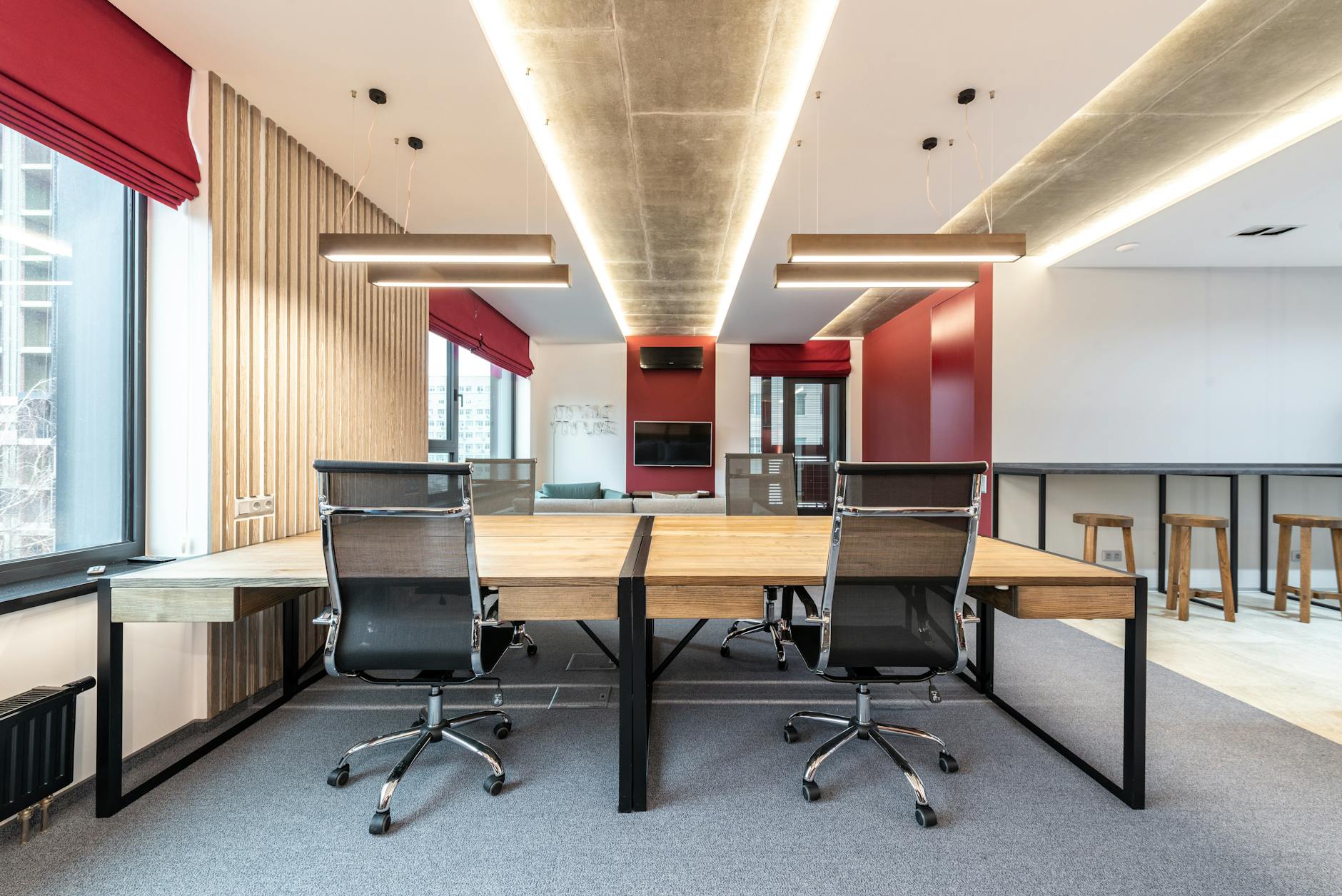
Inside the sleek concrete offices at 2300 Harrison Street in the Mission District of San Francisco, the air smells of roasted coffee and high-intensity computing. This week, the neighborhood is buzzing with the quiet intensity of engineers building the next wave of foundational intelligence. It is here that Silicon Valley AI startups are securing their positions as the primary drivers of the regional economy, defying broader macroeconomic shifts. While the California Association of Realtors recently reported that housing affordability retreated in the second quarter of 2026, the real estate market in these tech-centric pockets of Northern California remains highly competitive, driven by an influx of newly minted AI wealth and massive corporate footprints.
The investment landscape is no longer just about software that writes marketing copy or generates images. Instead, the focus has shifted toward building infrastructure that makes training models cheaper and creating physical manifestations of artificial intelligence that can interact with the real world. This pivot is bringing a wave of capital that is transforming local office markets, residential neighborhoods, and industrial centers from the Bay Area to Southern California. Founders are no longer waiting for the perfect market conditions; they are raising billions of dollars and scaling their operations at a breakneck pace.
Re-Engineering Foundation Models in the Mission
In the heart of San Francisco, the competitive landscape of machine learning is being rewritten by familiar faces. Mira Murati, the former Chief Technology Officer of OpenAI, has officially stepped into the spotlight with her new venture, Thinking Machines Lab. Based in a sunlit loft space in San Francisco, CA 94110, the company recently announced its flagship product, Tinker. Tinker operates as a specialized API designed to help developers fine-tune the training of their artificial intelligence models without the prohibitive costs of starting from scratch.
By using Low-Rank Adaptation techniques, commonly referred to as LoRA, Tinker allows engineers to make precise, lightweight adjustments to specialized adapters rather than retraining an entire massive model. This technical shift is a massive deal for businesses trying to build proprietary tools without exhausting their capital. Instead of spending millions of dollars on raw compute power, developers can use Tinker to adapt existing models to their specific industry datasets in a matter of hours.
This development highlights a larger trend among Silicon Valley AI startups that are focusing on efficiency over raw scale. It also explains why capital continues to pour into these companies despite a tighter overall economic environment. Investors are hunting for startups that solve the massive cost bottleneck of modern computing. This search for efficiency is creating a distinct class of highly valued companies that can operate with lean teams while commanding multi-billion dollar valuations.
Physical AI Dominates Southern California Deals
While Northern California remains the undisputed capital of software intelligence, Southern California is rapidly capturing the market for physical automation. This week, the physical AI startup Atoms, founded by former Uber chief Travis Kalanick, made waves by securing a massive 1.7 billion dollar funding round led by the venture capital firm Andreessen Horowitz. Operating out of a highly secure industrial facility in Los Angeles, CA 90023, Atoms is focused on bridging the gap between digital models and real-world execution.
Kalanick has described the mission of Atoms as giving eyes, limbs, and spatial awareness to the digital brains developed in Northern California. The sheer scale of this funding round shows that investors are willing to make massive, long-term bets on the physical infrastructure of the future. This influx of capital has immediate implications for the commercial real estate sector in Southern California. Atoms is actively expanding its footprint, snapping up industrial warehouses and advanced manufacturing spaces that can accommodate heavy robotics testing and hardware assembly.
The massive infusion of capital into physical intelligence is turning industrial zip codes into premium real estate hotspots.
This trend is reshaping neighborhoods that were once dominated by traditional manufacturing. As these advanced engineering firms move in, they bring high-salaried professionals who keep the local luxury residential market remarkably resilient, even as broader housing affordability across the state faces headwinds. The demand for homes in nearby coastal enclaves is rising, driven directly by the expansion of these deep-tech engineering teams.
The Seed Stage Surge in Menlo Park and San Diego
The funding environment is not just healthy at the top of the market; early-stage companies are also securing vital capital to scale. As Silicon Valley AI startups attract unprecedented capital, the talent pipeline is shifting too. In Menlo Park, CA 94025, medical technology firm Apreo Health closed a successful Series B round to expand its intelligent diagnostic software. At the same time, San Francisco-based Kiva AI secured seed funding to build out its specialized data annotation platforms. These mid-sized deals demonstrate that the appetite for specialized applications of artificial intelligence remains incredibly strong.
Further south, the momentum is equally visible. During the Edge AI conference held in San Diego this week, industry leaders gathered to discuss how to run complex models directly on local hardware. This shift to edge computing is critical for autonomous driving, defense, and healthcare, where latency is paramount. The concentration of defense and biotechnology firms in San Diego makes the city a natural incubator for this specific technology.
The local real estate market in these innovation hubs reflects this specialized demand. Commercial brokers in San Diego report that properties with advanced laboratory spaces and dedicated fiber-optic connections are trading at a premium. Startups are willing to pay top dollar for locations that allow their hardware and software teams to collaborate under one roof, creating a tight supply of suitable light-industrial space.
Productivity Tooling Reaches Hyper Scale
Beyond hardware and developer APIs, the everyday applications that professionals use are experiencing an unprecedented boom. Anysphere, the creator of the popular coding environment Cursor, saw its valuation soar to 29.3 billion dollars. This staggering valuation cements Cursor as one of the most successful Silicon Valley AI startups in history, proving that developer productivity is one of the most lucrative sectors in the modern economy.
Meanwhile, companies like Gamma, led by CEO Grant Lee, are showing how quickly a startup can scale. Operating from offices in San Mateo, CA 94402, Gamma has amassed over 100 million users with a core team of only 50 employees. This level of operational efficiency represents a fundamental shift in how businesses are built, where a handful of engineers can support a global user base by relying on sophisticated automation tools.
This lean operational model is changing how startups approach office space. Instead of signing ten-year leases for massive downtown high-rises, these fast-growing teams are opting for flexible, high-end collaborative hubs. They prioritize density and bandwidth over sheer square footage. The result is a highly dynamic commercial market where spaces are constantly being reimagined to suit hyper-focused, highly productive teams that are rewriting the rules of global industry from their California offices.
Frequently Asked Questions
What is the main focus of Mira Murati's new startup, Thinking Machines Lab? Thinking Machines Lab builds tools that simplify machine learning fine-tuning. Their product, Tinker, is an API that uses Low-Rank Adaptation techniques to make precise adjustments quickly and cost-effectively, avoiding the massive expenses associated with retraining entire systems from scratch.
How is physical AI impacting the real estate market in Southern California? Physical AI companies require space for manufacturing and testing. Startups like Atoms acquire industrial properties, turning manufacturing districts into tech hubs. This commercial expansion drives up residential demand in adjacent neighborhoods as highly paid engineers look for housing near these research facilities.
Why are early-stage funding rounds like seed and Series B still highly active? Investors are increasingly looking for specialized, domain-specific applications of technology that solve immediate real-world problems. Companies focusing on healthcare diagnostics, edge computing, and high-quality data annotation are seeing strong demand because they offer clear paths to profitability and do not require the astronomical compute budgets of general foundation models.
Ecomstation.ai